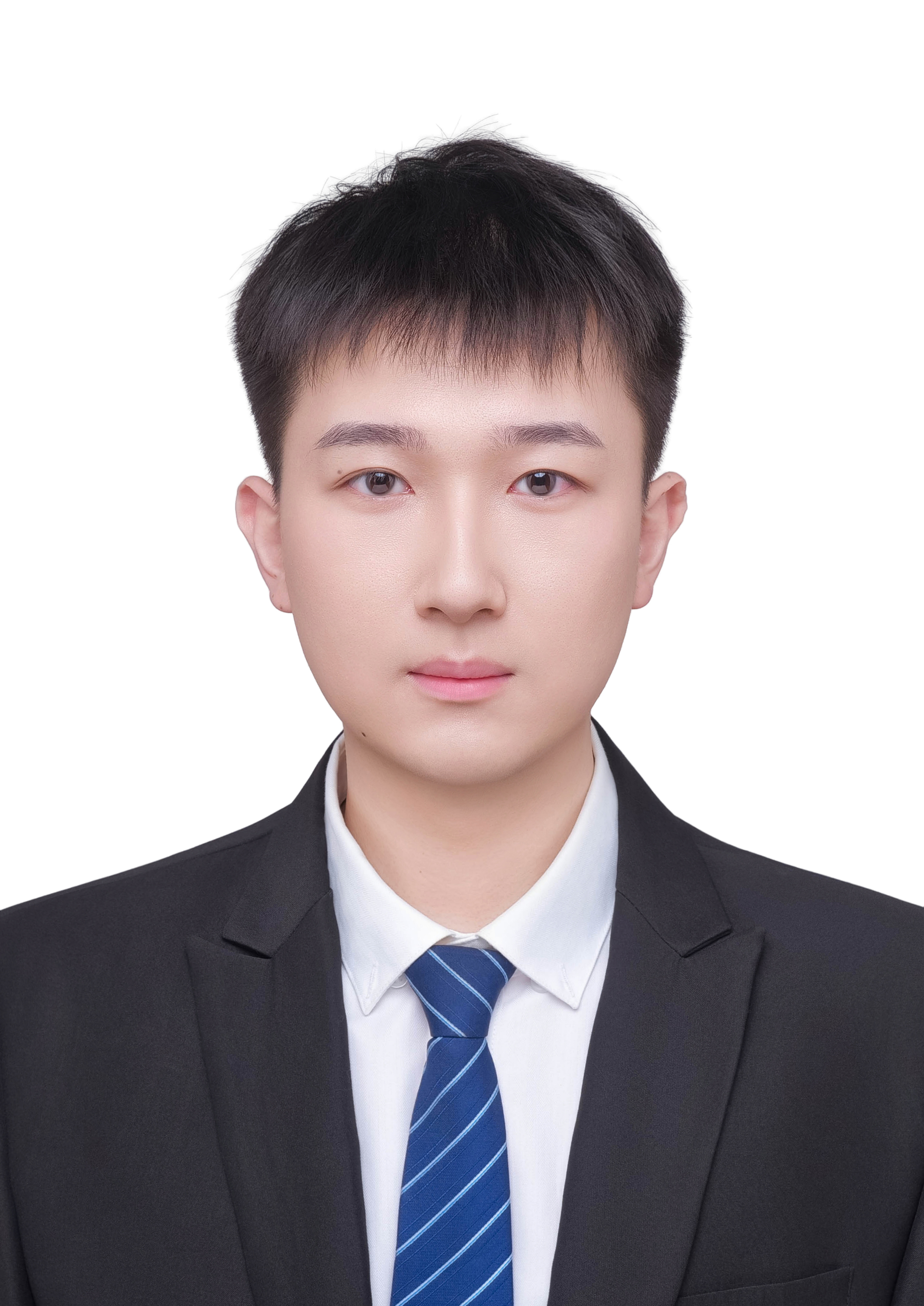
LI Xinran
👋 Welcome!
I am LI Xinran (李欣然), a dual-degree M.S. student at Waseda University (Japan) and Dalian University of Technology (China), specializing in Natural Language Processing (NLP).
My research focuses on Emotion Recognition in Conversation (ERC) and Aspect-Based Sentiment Analysis (ABSA), leveraging large language model techniques and designing Curriculum Learning frameworks for downstream NLP tasks.
I am currently actively applying for Ph.D. positions — please feel free to contact me!
🎓 Education
Waseda University, Graduate School of Information, Production and Systems — Dual M.S. Degree (Expected Mar. 2027)
Research on Aspect-Based Sentiment Analysis (ABSA) with Curriculum Learning and Large Language Models.
Kitakyushu Academic Research City Scholarship Recipient.Dalian University of Technology, School of Software — Dual M.S. Degree (Expected 2027)
Research on Emotion Recognition in Conversation (ERC) using Graph Neural Networks and Improved Curriculum Learning.
Outstanding Master’s Student Award (Top 20/300).Dalian University of Technology, School of Software — B.Eng. in Software Engineering (2020–2024)
Undergraduate research in NLP and medical imaging.
Average Score: 88, GPA: 3.8/4.0
Direct Admission to Master’s Program (Top 17%).
🧠 Research Interests
- Natural Language Processing (NLP)
- Emotion Recognition in Conversation (ERC)
- Aspect-Based Sentiment Analysis (ABSA)
- Large Language Models (LLMs)
- Curriculum Learning (CL)
🧩 Publications
1. Do LLMs Feel? Teaching Emotion Recognition with Prompts, Retrieval, and Curriculum Learning
AAAI 2026 (CORE A*, CCF A) — First Author
Authors: Xinran Li, Yu Liu, Jiaqi Qiao, Xiujuan Xu
We propose PRC-Emo, a new ERC training framework that integrates Prompt engineering, demo Retrieval, and Curriculum learning to investigate whether LLMs can effectively perceive emotions in conversations. PRC-Emo introduces emotion-sensitive prompt templates capturing both explicit and implicit emotional cues, constructs the first ERC-specific demonstration retrieval repository, and incorporates curriculum strategies into LoRA fine-tuning via weighted emotional shifts. Experiments on IEMOCAP and MELD achieve new SOTA results, demonstrating the strong generalizability of our approach.
Paper (DOI:10.1609/aaai.v40i38.40446) | Code (GitHub)
2. Long-Short Distance Graph Neural Networks and Improved Curriculum Learning for Emotion Recognition in Conversation
ECAI 2025 (CORE A, CCF B) — First Author
Authors: Xinran Li, Xiujuan Xu, Jiaqi Qiao
Developed a novel LSDGNN + ICL framework combining long- and short-distance GNNs for ERC tasks, improving emotion classification on IEMOCAP and MELD datasets.
Paper (DOI:10.3233/FAIA251292) | Code (GitHub)
3. CheX-DS: Improving Chest X-ray Image Classification with Ensemble Learning Based on DenseNet and Swin Transformer
IEEE BIBM 2024 (CCF B) — First Author
Authors: Xinran Li, Xiujuan Xu, Yu Liu, Xiaowei Zhao
Designed CheX-DS, combining DenseNet and Swin Transformer for long-tail medical image classification, achieving 83.76% AUC on NIH ChestX-ray14 dataset.
Paper (IEEE BIBM 2024)
4. Extensible Multi-Granularity Fusion Network and Transferable Curriculum Learning for Aspect-based Sentiment Analysis
Under Review — First Author
Authors: Xinran Li, Xiaowei Zhao, Yubo Zhu, Zhiheng Zhang, Zhiqi Huang, Hongkun Song, Jinglu Hu, Xinze Che, Yifan Lyu, Yong Zhou, Xiujuan Xu
Proposed an Extensible Multi-Granularity Fusion (EMGF) network that unifies dependency syntax, constituency syntax, attentional semantics, and external knowledge graph information. It achieves efficient feature collaborative modeling through multi-anchor triplet learning and orthogonal projection, incorporating a transferable curriculum learning strategy to enhance model generalization.
Paper (arXiv:2402.07787)
5. A Unified Framework for Emotion Recognition and Sentiment Analysis via Expert-Guided Multimodal Fusion with Large Language Models
Under Review — Third Author (Second among students)
Authors: Jiaqi Qiao, Xiujuan Xu, Xinran Li, Yu Liu
Proposed an Expert-Guided Multimodal Fusion (EGMF) framework integrating multimodal cues via LLMs and LoRA fine-tuning, achieving superior results on MELD, CHERMA, MOSEI, and SIMS-V2 datasets.
Paper (arXiv:2601.07565)
🏅 Honors & Awards
- Kitakyushu Academic Research City Scholarship, Waseda University (2025)
- Outstanding Master’s Student Award, DUT (2025)
- Direct Admission to Master’s Program, DUT (2024)
- Second-Class Scholarship for Academic Excellence, DUT (2021, 2022)
🛠️ Skills
Programming & Tools: Python, Java, LaTeX, Git, Jupyter Notebook, PyTorch, HuggingFace Transformers
Domains: Graph Neural Networks, Transformers, Curriculum Learning, Large Language Models Standardized Tests: TOEFL 95, GRE 322
📫 Contact:
Email:
I am currently actively applying for Ph.D. positions — please feel free to contact me if you are interested in research collaboration or supervision opportunities!